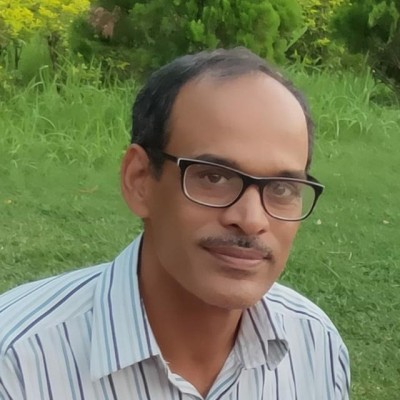
ECE Special Seminar: “Spiking Neural Networks for Processing Bipolar Signals”
Presented by: Professor Pradip Mandal, IIT Kharagpur Description: “Efficient parallel processing and self-learning mechanisms of human brain has inspired scientists to mimic its working mechanisms in artificial systems. Artificial neural network (ANN) systems essentially follow the working principles of the human brain, consists of many neurons connected through synapses. ANN has wide range of applications such as, biomedical engineering, chemical engineering, agriculture, stock markets, smart electronic gadgets, and many other fields. Though the ANN based systems have evolved a lot, their power efficiency is far behind than that of human brain, which consumes around 20 W during daily activity. Third-generation ANNs, the spiking neural networks (SNNs), are specifically designed to closely mimic the spike-based processing of the human brain, making them the most power-efficient among all ANNs. There are several research efforts to build silicon spiking neural networks over the past decades. Most of the existing SNNs are suitable for processing of unipolar signals because, these architectures are built to mimic biological system that essentially process unipolar inputs. Thus, for a bipolar input signal, the input should be first converted to a unipolar signal by adding an offset at the input. In this research, we have proposed a novel spiking neural network, specifically designed to process bipolar inputs without requiring an input offset. The proposed system consists of two bipolar neuromorphic cores: a bi-directional spiking neuron (BSN) and a bipolar silicon synapse (BSS). The proposed BSN can sense a bipolar input signal and generate two distinct types of output spikes depending on the input polarity. These spikes are then received by the proposed BSS and generate a bipolar post-synaptic current (PSC) for the next neuron. A prototype system has been designed in TSMC 65nm process technology, and the simulated behaviour has been analyzed.
Listing and photo from UCSC Events ↗
More at Engineering 2
- CSE Colloquium: Explore/Exploit in Human and AI Foraging and Creativity EducationFri, Nov 20, 2026
- Bondar, G. (AM) – Geometric and Graph Structured Optimal Transport for Learning and Control EducationMon, Nov 23, 2026
- ECE 290 Seminar: “Advancing Medical Imaging Through Artificial Intelligence and Deep Learning” EducationMon, Nov 23, 2026
- Aguirre Pérez de León, J. (STAT) – Statistical Inference for Conditional Quantiles and Fixed-Content Intervals: Models, Computation, and Applications EducationMon, Nov 30, 2026
- Khan, M. (CSE) – Clock Mesh Analysis and Optimization using Surrogate Models with Graph Neural Networks EducationMon, Nov 30, 2026
- CM Seminar: Dr. Tyler Munger EducationMon, Nov 30, 2026
Similar events
- Produce Pop-Up EducationFri, Nov 20, 2026 · UC Santa Cruz
- Aesthetic Breach: Past and Present Struggles for Justice in North African Comics EducationFri, Nov 20, 2026 · Eloise Pickard Smith Gallery
- Demystifying Failure: The Necessity of Mistakes EducationFri, Nov 20, 2026 · Academic Resources Center (ARC)
- SWANA Con – Delegation Sign Up Deadline EducationFri, Nov 20, 2026 · UC Santa Cruz
- New Play Festival EducationSat, Nov 21, 2026 · Second Stage
- Statistics Seminar: Randomization Posteriors and Generalized Bayesian Inference EducationMon, Nov 23, 2026 · Jack Baskin Engineering
More things to do this weekend → What's on today →
Something not right here? 🐛 Report a problem with this event's details